Rick Novakovski Career Spotlight
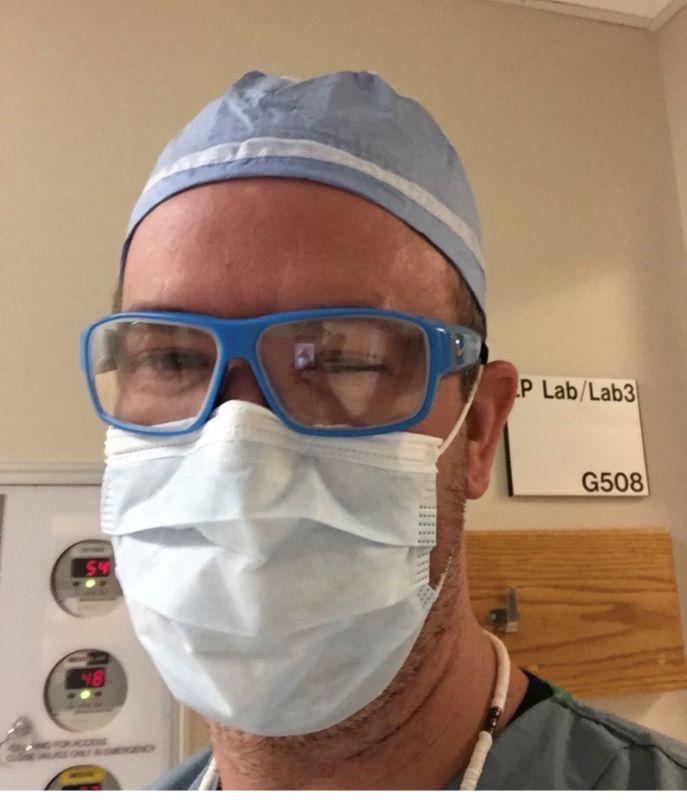
My name is Rick Novakovski, and I am a Medical Radiation Technologist, who specializes in Angiography (IR), we are sometimes also referred to as vascular x-ray technologists or Angiography Technologists. I work at Royal University Hospital (RUH) in Saskatoon, Saskatchewan.
What are you responsible for as a Medical Radiation Technologist - Angiography (IR) Specialty?
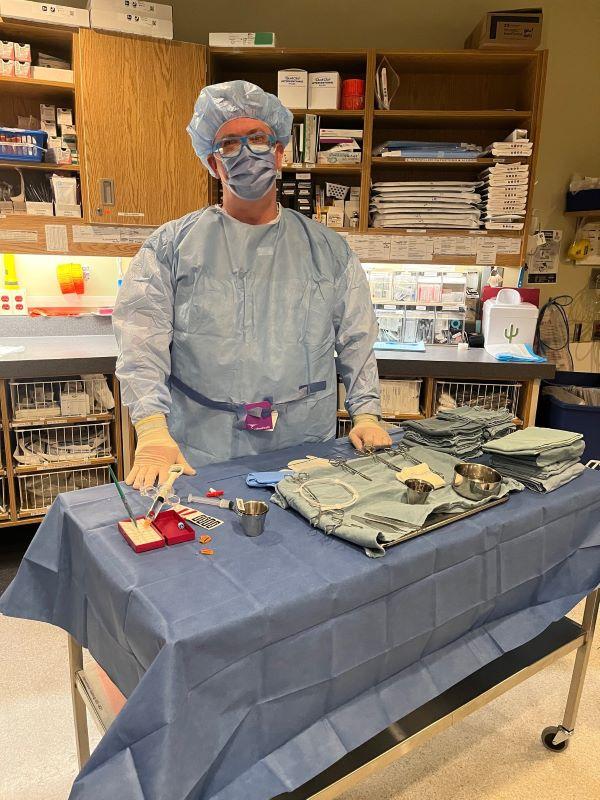
We have many daily roles and responsibilities. We assist with Operating Room (OR) like procedures many of them are urgent or emergent. It is our responsibility to prepare sterile trays and fields for each case. We scrub in or circulate during procedures (adding supplies and providing patient care) to assist physicians with the procedure. We also prepare patients before their procedure by: ensuring required bloodwork is completed, confirming fasting status, completing any special preparations organizing patients for their procedures, triaging phone calls for doctors, cleaning rooms after the procedures, educating patients about procedure as well as providing aftercare instructions, utilize different imaging modalities such as ultrasound and fluoroscopy, administration of medications to patients, re-prep the room for the next case, and prepare all images for PACS and samples for the lab (if required).
At Royal University Hospital, we work across multiple specialized areas, including Interventional Radiology (Angiography/Vascular), Neuro Interventional procedures such as stroke and aneurysm treatment, Arteriovenous Malformations (AVMs), the Cardiac Catheterization Lab, and the Pediatric Catheterization Lab.
There are over a hundred or procedures that we assist in including special IV access (PICCS, PORTS, Hemodialysis lines), biopsies, drainages of various conditions and procedures (biliary drains, nephrology tubes, paracentesis), angiograms of various blood vessels and treatment of pathologies like GI bleeds, liver tumors, Arteriovenous Malformations (AVM’s) and others, cardiac angiograms and treatment of cardiac vessels, neuro angiograms and treatment of strokes, AVM’s, carotid stenosis, and tumors, and variety of other complex procedures.
Some of these procedures are 15-20 minutes and others can take several hours. Because of the length of our procedures, patient care is paramount for our profession to ensure patients feel as comfortable as possible using distraction such as an iPad or conversation tailored toward the patient’s interests. Anesthesia is often involved in the procedures we perform due to their complexity.
How is your work-life balance as a Medical Radiation Technologist - Angiography (IR) Specialty?
As an Angiography Technologist, we work mostly 8:00-4:30 p.m. for our shifts. Two of us are required to be on call for any emergencies outside of regular scheduled hours. This can definitely make work/life balance tricky at times. It can be busy, but we are trained to manage as best we can and work as a team or family to help each other out as necessary.
Have you always wanted to be a Medical Radiation Technologist - Angiography (IR) Specialty?
As a young impressionable x-ray technologist, you get exposed to many areas and mentors to guide your path. In my case, a gentle giant of a man named Larry took me under his wing and who show me Angiography procedures.
When I first started as a new grad, I spent a lot of time in the OR and gravitated to that environment because we not only saw the pathologies or fractures but then went on to help fix them. Since Angiography and the OR are very similar in that way, it was a natural transition for me.
Are there opportunities to further your career as a Medical Radiation Technologist - Angiography (IR) Specialty?
There are opportunities to advance after becoming an Angiography technologist. Once trained you can move into a supervisory role, or you can work in the industry as a sales or application representative.
Do you have any advice for students or new graduates looking to pursue a career as a Medical Radiation Technologist - Angiography (IR) Specialty?
As far as advice goes, I would tell people to focus on developing their interpersonal skills, patient care, and empathy as you will need to use these skills a lot as an Angiography technologist. Your knowledge and technical skills will grow with time and eventually it becomes muscle memory, allowing you to work confidently in this environment. There is certainly a learning curve when moving from general x-ray to an Angiography technologist.
What is the number one thing you love about being a Medical Radiation Technologist - Angiography (IR) Specialty?
My number one thing is working with and helping people to treat what ails them. It is extremely rewarding to be a part of the solution or to help fix a problem. People are people, they love to laugh, they feel pain, and they want to feel safe and cared for. Humanity goes a long way in this profession.