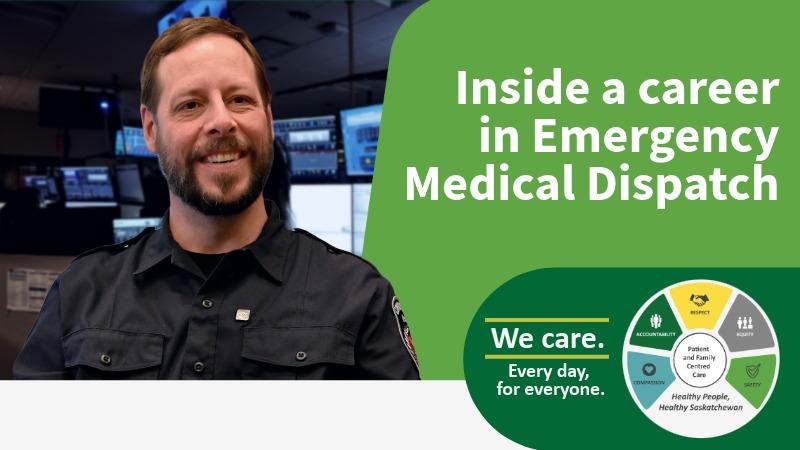
Inside a career in Emergency Medical Dispatch
Behind every emergency response is a skilled dispatcher helping ensure the right care reaches the right place at the right time.
Keith Willis has worked as an emergency medical dispatcher with the Saskatchewan Health Authority for 14 years. He and his colleagues receive 9-1-1 calls, process them as emergency events and dispatch ambulances and first responder groups across their response area. Sometimes that means staying on the line with a caller until help arrives, giving instruction on anything from controlling bleeding to performing CPR.
"You're working with people who are often having the worst day of their lives," said Willis. "So you need to be emotionally resilient."
No two calls are the same, and no two moments unfold the same way.
The job is fast-paced, Willis said, with several things happening at once, which is part of why certain traits matter so much in this line of work. He points to attention to detail, strong listening skills and the ability to improve based on feedback as qualities that help someone thrive as a dispatcher.
Being comfortable with technology helps too, as dispatchers are managing calls, systems and responders simultaneously.
"If I'm doing my job well and I'm getting ambulances and first responders on scene to where they're needed, then that makes me feel like I truly made a difference every day in those people's lives," Willis said.
The Saskatchewan Health Authority is currently looking to grow its emergency medical dispatch team. If you're someone who stays calm under pressure, listens well and wants a career built around helping people on their worst days, learn more about opportunities with SHA: https://www.saskhealthauthority.ca/careers-volunteering/careers/career-profiles/emergency-medical-services/emergency-medical-dispatcher-career-profile