

Kendra Grandel Career Spotlight
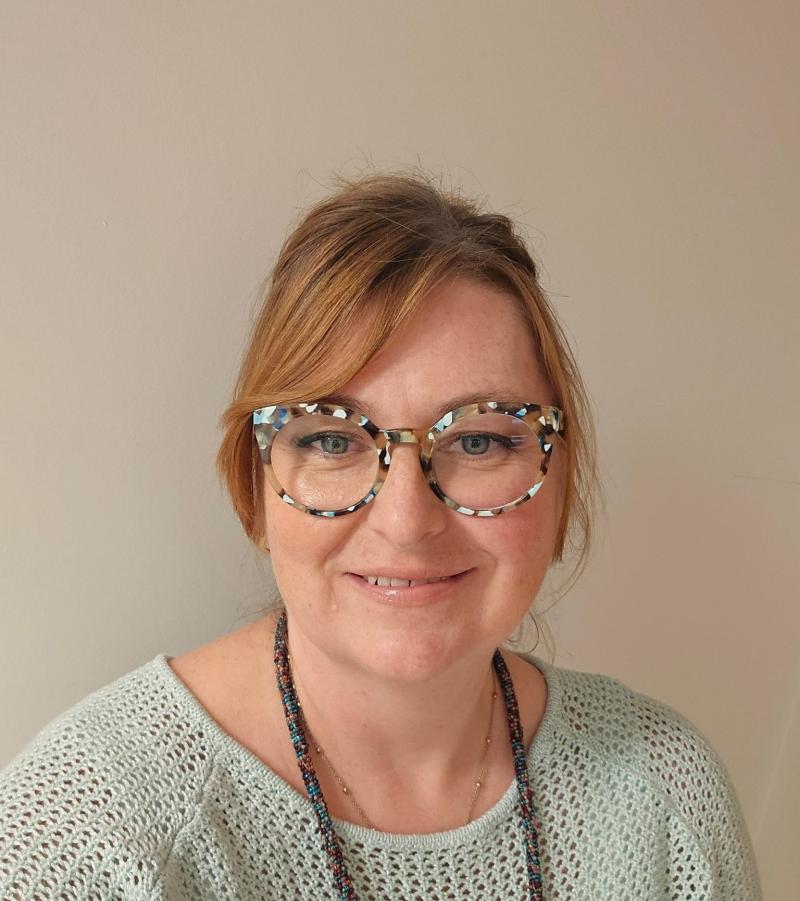
My name is Kendra Grandel, I am the Clinical Nurse Educator for Medical Imaging in Regina, supporting both Regina General Hospital and Pasqua Hospital. In addition, I am part of the Saskatchewan Health Authority (SHA) Medical Imaging Quality and Safety team, where I focus on education, quality improvement, and promoting safe patient care practices across the province.
What are your primary responsibilities as a Clinical Nurse Educator in Medical Imaging?
As a Clinical Nurse Educator in Medical Imaging, I support Registered Nurses and other staff in developing the skills and confidence needed to provide safe, high-quality care in a unique and fast-paced environment. I provide education, mentorship, and clinical support, while also collaborating and consulting with other areas to promote and maintain best practices in medical imaging specialty care. This work helps strengthen patient safety and fosters a culture of continuous learning within this specialized setting.
In Medical Imaging, no two days are the same—you encounter a wide range of patients and procedures, making the role both dynamic and engaging.
How would you describe your work-life balance in this role?
One of the aspects I value most about working in Medical Imaging is the ability to maintain a healthy work–life balance. Working eight-hour day shifts with no weekends or statutory holidays allows me to be more present for my family and maintain balance outside of work. This schedule, combined with meaningful and engaging work, supports both my personal well-being and long-term professional satisfaction.
Have you always been interested in working in Medical Imaging?
When I first applied as a Registered Nurse in Medical Imaging, I didn’t know much about the specialty. The posting stood out to me because it offered a Monday–Friday day schedule with on-call requirements, and at the time, shift work had become challenging while raising a young family. It wasn’t until the interview that I truly began to understand what Medical Imaging involved. Although it seemed quite different from the areas I had previously worked in, I was excited by the opportunity to learn new skills in a new environment.
It didn’t take long for me to realize how much I enjoyed the work and the challenges it offered. I also came to appreciate how valuable my previous nursing experience was in supporting my role in Medical Imaging. I began my journey in Interventional Radiology and remained there for many years. I quickly developed a passion for the work—it was incredibly interesting and rewarding, and I felt fortunate to have found such a fulfilling area of nursing. While there was a significant learning curve, that challenge was part of what made the experience so meaningful.
I later stepped away from Medical Imaging to pursue other professional opportunities. During that time, I recognized just how valuable the knowledge and skills I had gained in Medical Imaging were in my new role. It provided me with a strong foundation and a unique perspective that I carried forward. I have always valued the work we do in Medical Imaging—we care for patients across all stages of life and play a vital role in their healthcare journey. There is something truly special about this area of nursing, which is why I didn’t hesitate to return when the opportunity arose to come back as the Clinical Nurse Educator.
What opportunities exist for career growth or advancement within this role?
As a technology-driven specialty, Medical Imaging is often at the forefront of diagnostic and interventional medicine. The field continues to evolve, advancing toward less invasive procedures and improved patient outcomes. I am especially proud to have been part of the team that developed our Vascular Access program, including Saskatchewan’s first RN-led PICC insertion team. Being involved in this initiative has been both professionally rewarding and a highlight of my career to date.
What advice would you offer to students or new graduates interested in pursuing a career as a Registered Nurse in Medical Imaging?
Medical Imaging is a specialty area that, while often considered “non-traditional,” fully reflects the core principles of nursing practice. It requires strong clinical judgment, patient advocacy, critical thinking, and the ability to provide holistic care—even during brief patient interactions. Registered Nurses in this field need excellent assessment skills and must be able to make timely decisions, particularly during procedures where a patient’s condition can change quickly. The work is highly collaborative, with Registered Nurses working closely alongside Medical Radiation Technologists, Sonographers, Radiologists, and other healthcare professionals to ensure safe, high-quality care. It is an exciting and dynamic environment, especially for those who are eager to learn new skills and continue growing in their practice.
What is the one thing you enjoy most about working in Medical Imaging as a Clinical Nurse Educator?
I truly enjoy all aspects of working in Medical Imaging. I value the opportunity to continually learn and develop new skills, which makes the work both engaging and rewarding. The field is constantly evolving, keeping the work interesting and providing new challenges that help me grow in my practice.
Just as importantly, I appreciate the opportunity to make a meaningful difference in our patients’ lives and their healthcare journeys—often during vulnerable moments—by delivering care with dignity, compassion, and respect. I view Medical Imaging as somewhat of a hidden gem within healthcare, where meaningful, impactful work takes place every day.
