

Kristen Crewe Career Spotlight
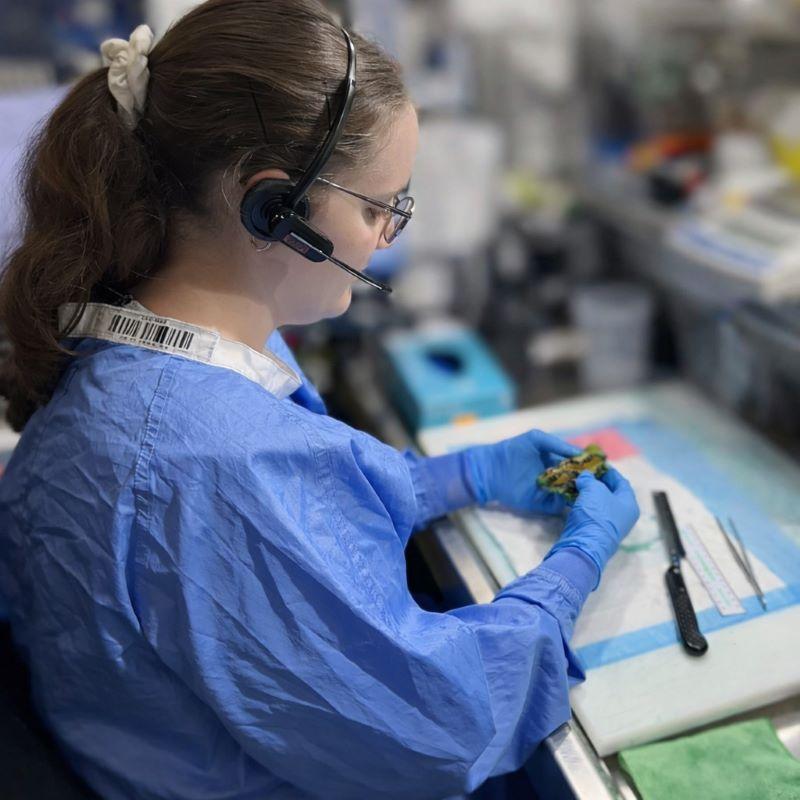
Kristen is a Pathologists’ Assistant working in the anatomic pathology laboratory located in Saskatoon.
What is it like working as a Pathologists’ Assistant with the Saskatchewan Health Authority?
Working as a Pathologists’ Assistant with the Saskatchewan Health Authority offers a unique and rewarding opportunity to play an important role in patient care within a collaborative laboratory environment. Our team works closely with pathologists to examine a wide variety of surgical specimens, providing ongoing opportunities to build specialized skills and expertise across many areas of pathology.
The gross room is a dynamic and engaging setting where no two days are the same. Team members are valued for their knowledge, professionalism, and contributions to high-quality patient care. This role is well suited for individuals who enjoy meaningful, hands-on work in a fast-paced environment and who thrive as part of a supportive, highly specialized team. As our service continues to grow, we are excited to welcome additional Pathologists’ Assistant to join us and contribute to the excellent care we provide to patients every day.
What are your primary responsibilities as a Pathologists’ Assistant?
As a Pathologists’ Assistant, we are responsible for the comprehensive handling and examination of a wide range of surgical pathology specimens, from small biopsies to large, highly complex resections. Our role includes the preparation and management of fresh specimens received directly from the operating room, ensuring appropriate handling for optimal fixation and downstream diagnostic testing. We also prioritize and process urgent specimens requiring specialized protocols, including tumor biobanking, lymphoma workups, and cytogenetic studies.
A typical day begins with reviewing and preparing specimens received from the previous day to ensure adequate fixation and proper tissue preservation. We then prioritize and gross the oldest pending cases, which may range from routine biopsies to complex malignant resections and large benign specimens. Responsibilities also include coordinating and assigning daily or weekly workflow duties among staff, such as urgent specimen coverage, breast specimen preparation, opening of specimens, and routine gross examination duties. This workflow ensures efficient specimen processing, timely diagnostic support, and adherence to quality and laboratory standards.
How would you describe your work-life balance in this role?
Working as a Pathologists’ Assistant requires the ability to maintain professional boundaries and support a healthy work-life balance. Given the nature of the role and the frequent exposure to cancer diagnoses and other significant diseases, it is important to approach the work with resilience while maintaining a positive and supportive work environment. Maintaining This mindset helps promote both personal well-being and professional effectiveness.
This profession provides exposure to complex and often emotionally impactful cases that many individuals outside the field may never encounter. As a result, the role is not suited to everyone; however, for those with a strong interest in medicine and pathology, it can be both intellectually stimulating and highly rewarding. Contributing to accurate diagnoses and patient care through detailed specimen examination and laboratory collaboration provides a strong sense of purpose and professional fulfillment.
Have you always been interested in becoming a Pathologists’ Assistant?
When I was completing my Bachelor of Science degree, I explored careers related to histology, anatomy, and biology, as those were the subjects I enjoyed most. I spoke with a professor who suggested the Pathologists’ Assistant profession to me. After networking and learning more about the available programs, I decided to apply. Although I was initially placed on a waitlist, I was accepted into the program just two weeks before classes began.
What opportunities exist for career growth or advancement within this role?
As a Pathologists’ Assistant, gaining extensive experience in gross examination is essential for professional growth and competency development. In Saskatchewan, we encounter a wide variety of specimens, ensuring our staff are well versed in many areas. Within the SHA, there are opportunities to pursue leadership roles, such as Pathologists’ Assistant Working Supervisor positions. These roles provide valuable experience in leadership, workflow coordination, and operational oversight, while also carrying responsibility for the daily function and efficiency of the gross room. Such positions offer an excellent opportunity for continued professional development and increased involvement in laboratory operations and team management.
What advice would you offer to students or new graduates interested in pursuing a career as a Pathologists’ Assistant?
For students or new graduates interested in pursuing a career as a Pathologists’ Assistant, I would strongly encourage reaching out to a laboratory manager to inquire about job-shadowing opportunities within the gross room. This experience offers firsthand exposure to the daily responsibilities of a Pathologists’ Assistant and can help individuals determine whether the career aligns with their interests and strengths.
When applying to Pathologists’ Assistant programs, it is recommended to apply to multiple institutions whenever possible. Admission to these programs is highly competitive, with only a limited number of students accepted each year. Applying to more programs can increase acceptance opportunities and broaden pathways into the profession
What is the one thing you enjoy most about being a Pathologists’ Assistant?
I enjoy working with specimens and having a highly hands-on role, and I value the opportunity to contribute to patient care without direct patient contact. Through this profession, I have developed a greater appreciation for the complexity of the human body, its capabilities, and the significant advancements medicine has made in diagnosing and treating disease.
