

Trisha Warlow Career Spotlight
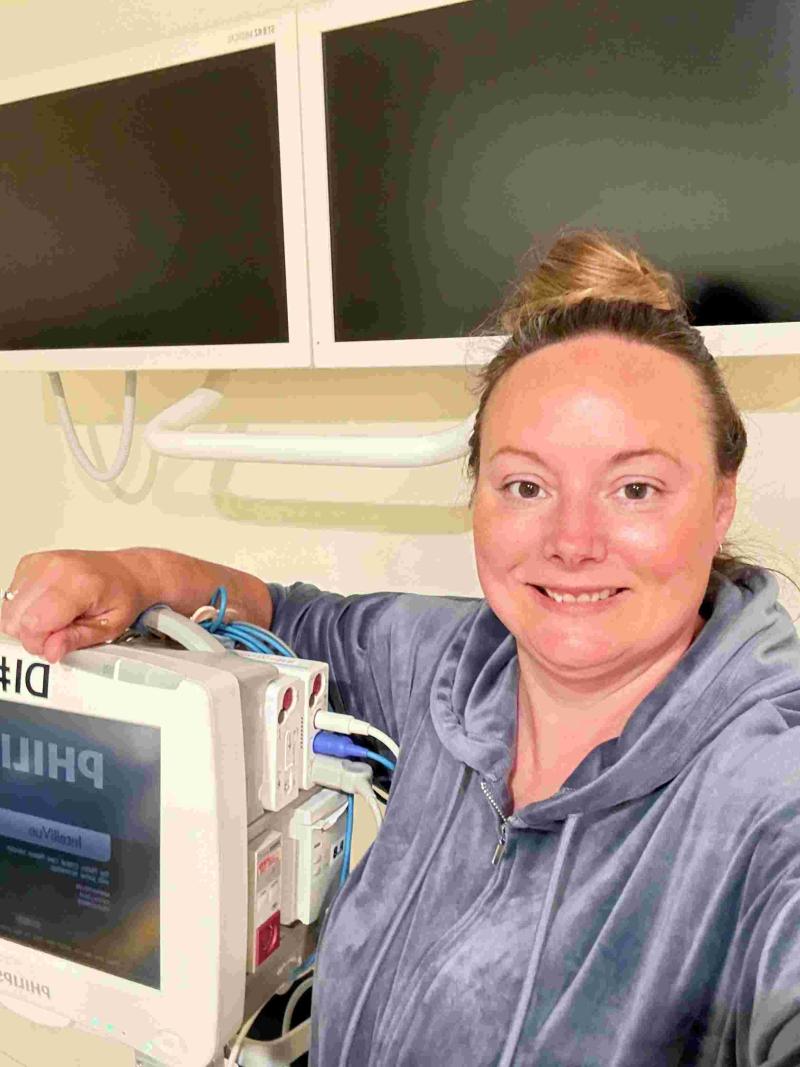
My name is Trisha Warlow, I am a Registered Nurse and I work in the Diagnostic Imaging department at St. Paul’s Hospital in Saskatoon.
What are your primary responsibilities as a Medical Imaging Nurse?
My primary responsibility as a Diagnostic Imaging Nurse is to support the unit in providing high-quality care to both inpatients and outpatients undergoing a variety of imaging scans and procedures. Our department includes a small recovery unit where we care for outpatients following procedures before they are discharged home.
Common procedures we recover include biopsies performed in ultrasound and CT—such as liver, prostate, lung, and kidney biopsies—as well as tumour ablations. We also care for patients following procedures in the angiography suite, such as angiograms, angioplasties, sclerotherapy, and nephrostomy tube insertions. While we perform a wide range of procedures, these are the most frequently seen on a daily basis.
In addition, our department is home to Saskatchewan’s only lithotripter. Once a week, we work with urology to provide care for patients from across the province who require shock wave therapy to treat kidney and ureter stones.
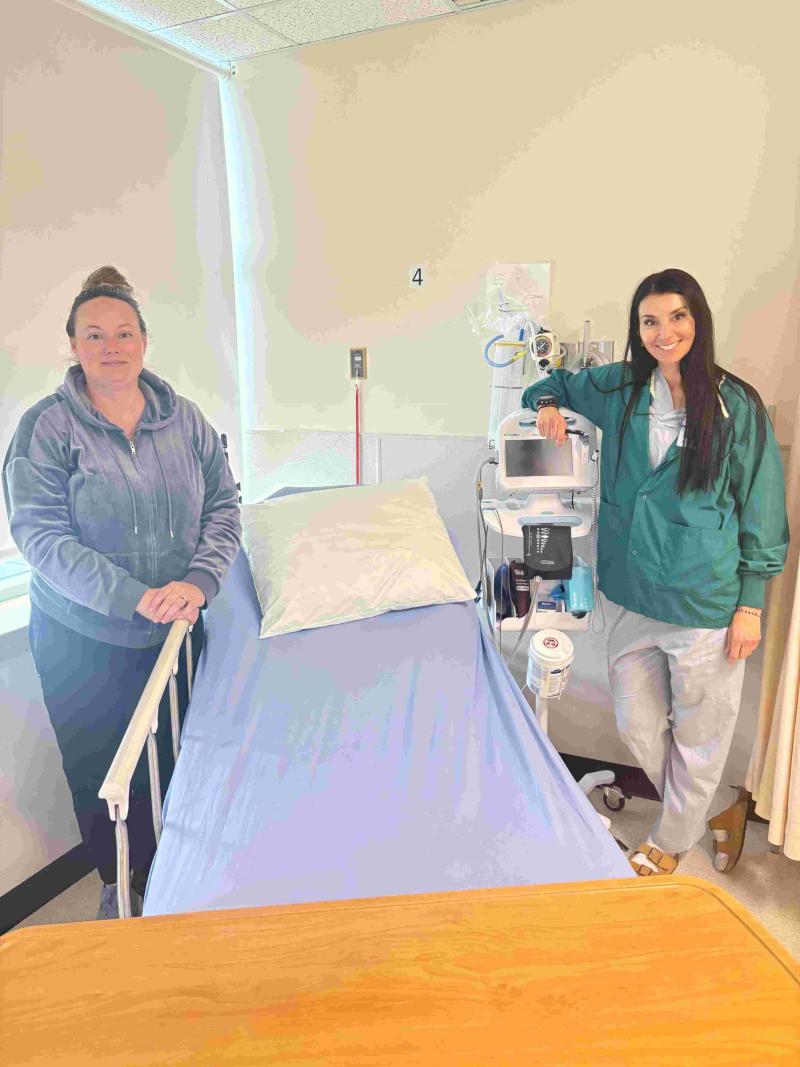
A typical day begins with admitting patients scheduled for procedures. This involves completing documentation, arranging bloodwork, starting intravenous lines, and reviewing each patient’s health history. At St. Paul’s Hospital, our five-bed unit often requires multiple admissions in the morning as we prepare patients for their procedures.
Recovery time varies depending on the procedure, but late mornings and afternoons are focused on closely monitoring patients to ensure they are stable, comfortable, and free from complications. This includes frequent vital sign monitoring, dressing assessments and changes, medication administration, and providing patient comfort and support.
We also play a key role in supporting the broader Diagnostic Imaging department, including MRI, CT, ultrasound, fluoroscopy, nuclear medicine, and the angiography suite. Teamwork is essential to managing workload and achieving optimal patient outcomes. This support may include starting IVs, assisting with tracheal suctioning, administering sedation or other medications, and helping colleagues as needed.
Our overall goal is to work collaboratively as a team to deliver safe, compassionate, and high-quality care to every patient.
How would you describe your work-life balance in this role?
Working as a Registered Nurse in the Diagnostic Imaging department offers an excellent work-life balance, in my opinion. This was a key reason I initially applied, as the role is based in a day unit. The schedule runs Monday to Friday during daytime hours, with no evenings, nights, weekends, or statutory holidays.
In previous roles, I worked a variety of shifts, including nights, evenings, weekends, and holidays. This position also does not require being on call, which was important for maintaining balance with my home life and personal commitments.
Have you always been interested in becoming a Medical Imaging Nurse
Working in Diagnostic Imaging was not something I had considered earlier in my career. Much of my experience was in Neonatal Intensive Care, a role I truly loved and always felt deeply connected to. However, after starting a family, I began looking for a position that better aligned with my home life. The daytime hours offered in Diagnostic Imaging made it an ideal fit.
While work-life balance was the initial reason for my transition, it didn’t take long for me to feel that I had found my new home. The nursing team in Diagnostic Imaging is small, which allows you to build strong relationships with your colleagues very quickly. The schedule continues to work well for me, and I’ve found that I’m able to spend more meaningful time with my patients.
With only five beds in our unit, we often have the opportunity to connect with patients on a deeper level—supporting not only their clinical needs but their emotional well-being as well. It is rewarding to be able to provide compassionate, holistic care that you can feel proud of at the end of each day.
What opportunities exist for career growth or advancement within this role?
Nursing in Diagnostic Imaging does not offer a wide range of traditional advancement or career ladder opportunities; however, the field is constantly evolving with advancements in medicine and technology, and working in this area allows you to be directly involved in that innovation.
For example, St. Paul’s Hospital is currently the only hospital in Saskatchewan—and in Western Canada—to offer transperineal prostate biopsies (TPPB), which was introduced as a new initiative. In addition, the department has recently implemented other advanced procedures, such as Nanoknife treatments and tumour ablations. Being part of a team that supports and delivers these cutting-edge procedures provides unique opportunities for professional growth and learning.
What advice would you offer to students or new graduates interested in pursuing a career as a Medical Imaging Nurse?
My advice to nursing students or new graduates is to build a strong general foundation early in their careers by working on a medical or surgical unit. This experience provides a broad base of knowledge and skills that will serve them well over time.
Developing this foundation helps Registered Nurses become more versatile and better prepared to transition between different areas of practice in the future. One of the greatest advantages of a nursing career, in my opinion, is the ability to explore different specialties until you find the right fit. This flexibility is easier to navigate when you have a solid understanding of the fundamentals and have had opportunities to develop and practice your clinical skills.
What is the one thing you enjoy most about being a Medical Imaging Nurse?
Diagnostic Imaging is a unique area to work in as a Registered Nurse. While all areas of nursing require collaboration with a variety of healthcare professionals, the nursing unit in Diagnostic Imaging is just one small part of the larger department. At times this can be challenging, but it is also one of the aspects I enjoy most. We work with a high level of autonomy, which I truly value, but what I enjoy most is the time we are able to spend with our patients.
As mentioned earlier, our nursing unit is small, which allows us to provide high-quality, patient-centered care without the time pressures often experienced in other areas. We have the opportunity to truly connect with our patients—listening to their stories, addressing their concerns, and offering support during what is often a stressful time. Being able to make a positive difference in their experience is both meaningful and rewarding.
Working in environments where there is not enough time to provide holistic care can lead to job dissatisfaction. In Diagnostic Imaging, that is not the case. The time we are able to dedicate to our patients is the greatest benefit and the primary reason I enjoy my work. At the end of each day, I can leave knowing my patients were well cared for and feel proud of the care I was able to provide.
